COB vs SMD LED Strips for Interior Decoration
In indoor lighting decoration, the most common types of LED strips are SMD and COB. They differ significantly in terms of light performance, installation methods, and application scenarios. So, how should you choose and use these two types of LED strips in residential decoration?
This article will compare their technical structures, suitable locations for decoration, and their pros and cons, helping you quickly choose the right LED strip.
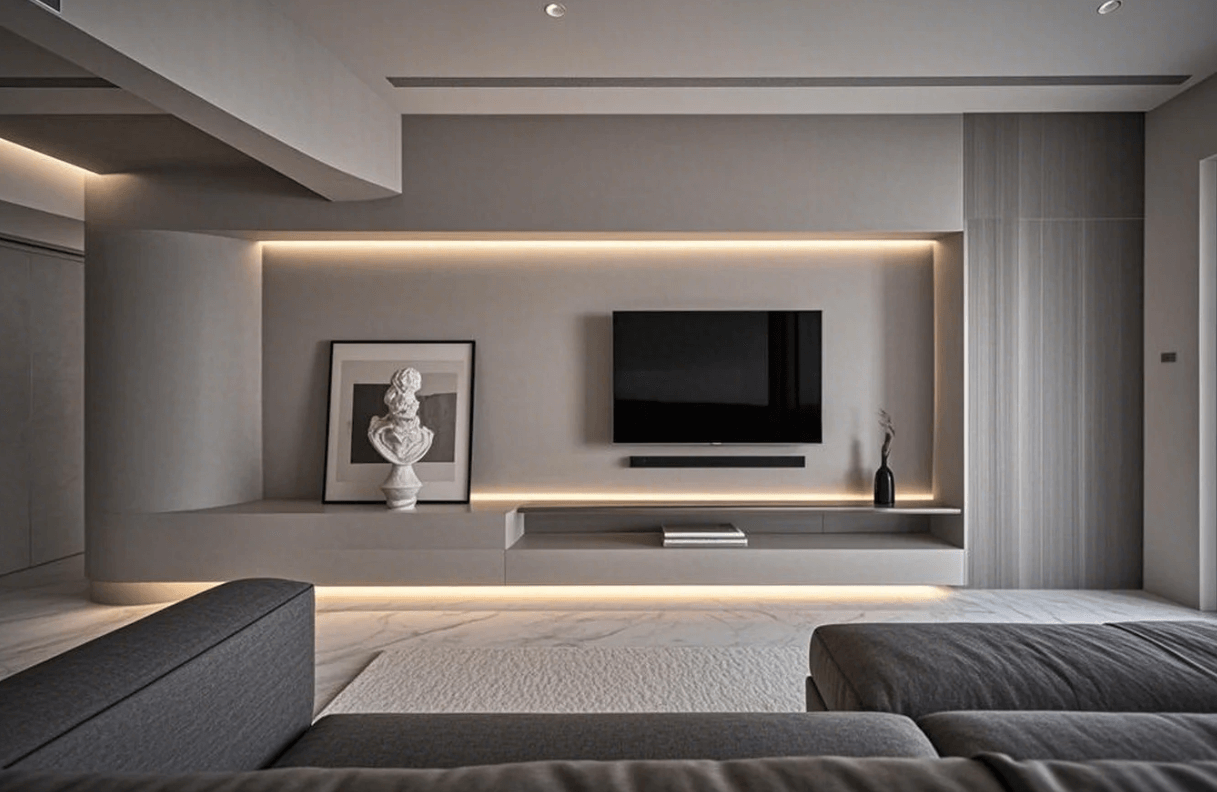
Technical Structure Differences Between COB and SMD LED Strips
With the popularity of no-main-light design and linear lighting, LED strips have become an important light source in both home and commercial spaces. From the early point-source lighting to the current pursuit of "light without visible lamps," users have higher demands for the uniformity, comfort, and installation adaptability of LED strips.
What is SMD LED Strip?
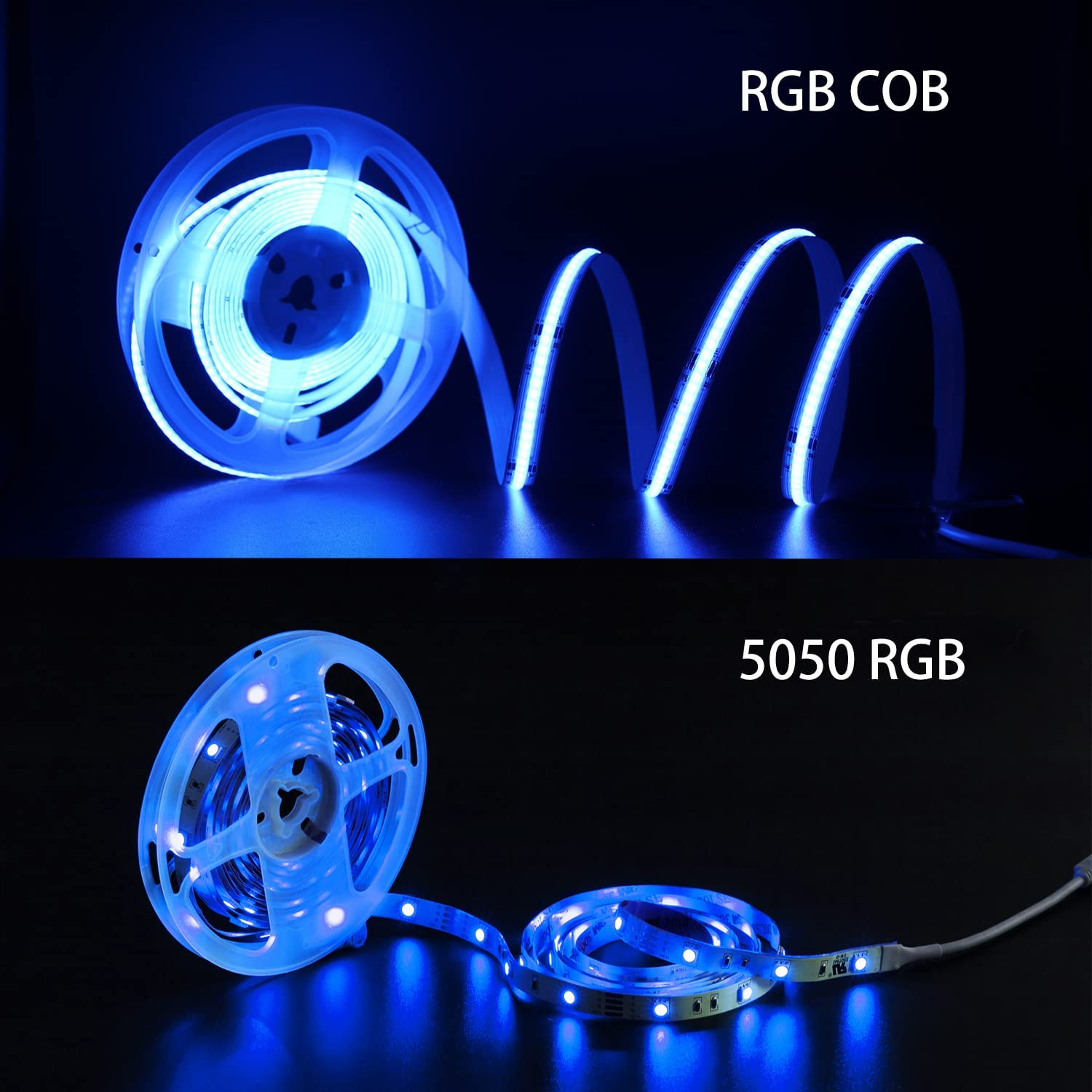
SMD (Surface Mounted Device) LED strips consist of individual LED chips soldered onto a PCB (Printed Circuit Board), arranged at fixed intervals to emit light. These strips are composed of separate LED chips, offering high brightness with a concentrated light source.
Technical Features:
- Visible LED beads, with noticeable point-source lighting
- Common specifications: 2835 / 5050 / 3528
- Large beam angle, easy to layer brightness
What is COB LED Strip?
COB (Chip On Board) LED strips are made by directly packaging a large number of micro LED chips onto a PCB (Printed Circuit Board). The chips are sealed with phosphor resin to create a continuous light surface. With a high-density arrangement of LED chips, the light is uniform, and the individual LED chips are not visible.
Technical Features:
- No granular effect, continuous linear light output
- High chip density (usually 480–840 chips/m)
- Even light spots with low glare
Where to Use COB & SMD LED Strips in Home Decoration?
Recommended Applications for COB LED Strips
COB LED strips are more suitable for spaces with high light quality requirements:
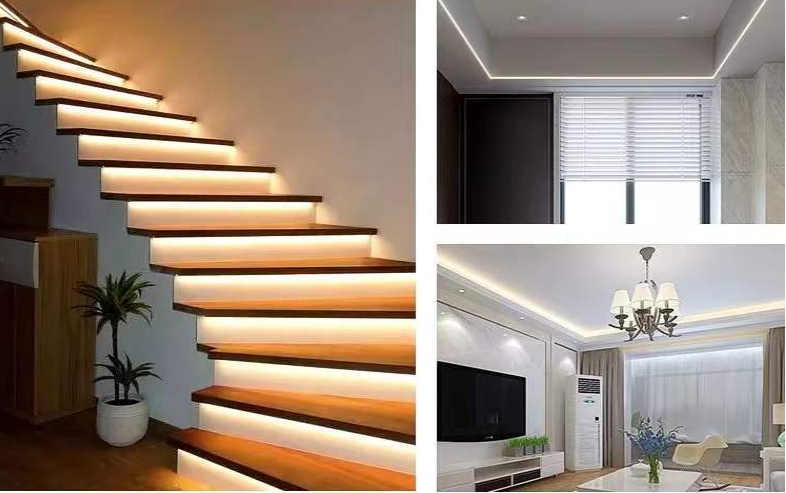
- Ceiling light slots / Concealed ceiling lighting
- Mainless lighting design for living rooms and bedrooms
- Wall washing lights, feature walls
- Lighting for wine racks, display cabinets, and showcases

Advantages Summary:
- Uniform light output with almost no "hot spots"
- Soft lighting effect achievable without relying on deep aluminum channels
- Better suited for high-end home decoration and designer projects
Recommended Applications for SMD LED Strips
SMD LED strips still have an advantage in functional lighting and high-brightness requirements:
- Under-cabinet lighting for kitchens
- Stair step lighting
- Commercial shelves and light boxes
- Engineering projects and budget-friendly decoration
Advantages Summary:
- High brightness with good cost-performance
- Mature specifications with strong compatibility for power supplies and accessories
- Easy to maintain and replace
COB vs SMD LED strips: A comparison of advantages and disadvantages.
|
Comparison Dimensions |
COB LED Strips |
SMD LED Strips |
|
Light Performance |
Continuous and uniform, no light spots |
Point-source lighting |
|
Visual Comfort |
High |
Medium |
|
Installation Requirements |
Low (shallow channels are enough) |
Higher (requires deep channels) |
|
Brightness Flexibility |
Medium |
High |
|
Suitable Audience |
High-end decoration / Designer projects |
Engineering / Practical decoration |
COB or SMD for Decoration? Practical Selection Advice
If you pursue a high-end look, linear effect, and comfortable lighting, COB LED strips are the better choice. If you focus more on brightness, budget, and practicality, SMD LED strips remain a reliable option. In actual projects, a combination of COB and SMD often balances both effect and cost.
Pitfalls to Avoid in Selection and Brand Assurance
Choosing the right LED strip is just the beginning; selecting a reliable supplier is key.
In decorative lighting, the parameters of LED strips are only the basics. What truly impacts long-term performance is the selection logic and the supplier's professionalism. Here are the three most common purchasing mistakes to avoid in advance.
Pitfall 1: Focusing Only on Brightness and Ignoring Color Rendering Index (CRI)
Many users compare only lumen values but overlook color rendering performance. High-quality LED strips should have a CRI (Ra) ≥ 90 to accurately reproduce object colors and reduce color distortion. In commercial spaces, showrooms, dining areas, and home environments, color rendering directly affects the visual experience and spatial quality.
Pitfall 2: Incorrect Driver Matching
Proper matching of LED strips and drivers is crucial. COB LED strips usually require stable constant current or dedicated drivers. SMD LED strips need to match the corresponding power supply based on their working voltage (12V/24V).
Mismatched drivers can cause overheating, flickering, or even damage to the LED strips, shortening their overall lifespan.
Pitfall 3: Chasing Low Prices and Ignoring Quality and Safety
Low-priced LED strips often come with fast light degradation, poor heat dissipation, unstable soldering, and other issues, posing safety risks with long-term use.
✔ It’s recommended to choose products from brands that have inspection reports, aging tests, and quality system certifications, ensuring project stability and after-sales support.
Conclusion: Choosing the Right LED Strip for Optimal Lighting Results
There is no absolute "better" between COB and SMD LED strips. The key lies in the intended location and lighting requirements. Understanding the differences between the two technologies will help you make a more professional choice in your decoration project.
👉 Contact us for COB and SMD LED strip samples
👉 Explore LED strip series solutions tailored to your project